
Turn your policy into training.
Create documented proof of understanding for audits.





Many companies discover the limitations of traditional compliance training tooling the moment they start preparing for an ISO 9001 audit.
Employees complete generic courses, click through awareness modules, and collect certificates. But when auditors ask how training relates to the company’s actual procedures, work instructions, or quality management system, things become less clear.
ISO 9001 increasingly emphasizes competence, awareness, and documented evidence tied to actual processes. At the same time, organizations are under pressure to keep procedures current, retrain employees after changes, and prove that staff understand the latest version of internal policies and SOPs.
In that environment, generic training libraries start to show their limits.
In this article, we will:
Before looking at the vendors, let’s first understand what ISO 9001 employee training actually requires.
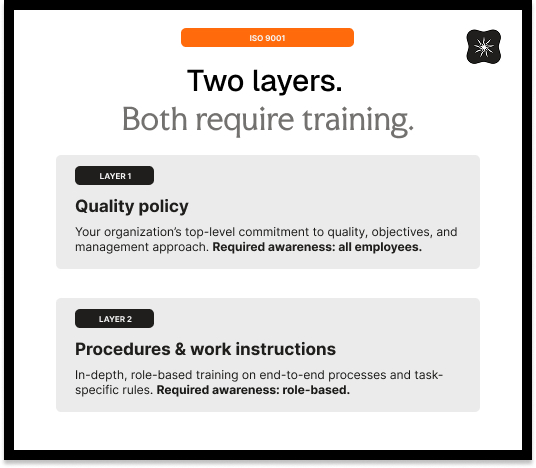
ISO 9001 is an international standard for quality management systems (QMS). It requires organizations to ensure that employees are competent for the work they perform and aware of relevant procedures, policies, risks, and responsibilities.
In practice, that usually means organizations need to:
Not all training platforms are designed for compliance-heavy environments.
Some are primarily LMS platforms with basic reporting. Others focus on off-the-shelf compliance libraries. A smaller group is moving toward AI-generated training built from internal documentation.
Before choosing a vendor, organizations should evaluate factors such as:
These considerations quickly separate an average LMS platform from systems designed for ISO 9001 training compliance.
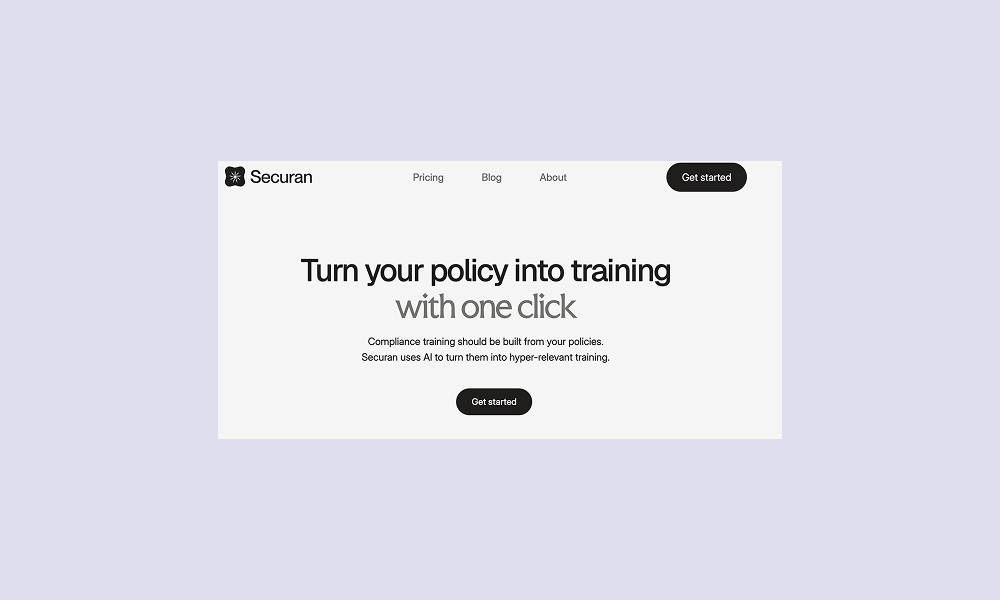
With Securan, you can build your own compliance training program for directives such as ISO 9001.
Instead of assigning generic compliance modules, you can upload your SOPs, work instructions, and quality management documentation. Securan then uses AI to generate training directly from those internal documents.
ISO 9001 audits are ultimately about operational reality. Employees are not audited on whether they completed a generic awareness course, but whether they understand the actual procedures used inside the organization.
Securan is built around exactly that idea.
When internal documents change, organizations can automatically trigger retraining on the latest version and maintain audit-ready evidence showing exactly who acknowledged which revision, and retrained.
The platform is especially strong for organizations with a wide variety of internal documents, frequent process updates, or role-specific operational procedures.
Pros:
Cons:
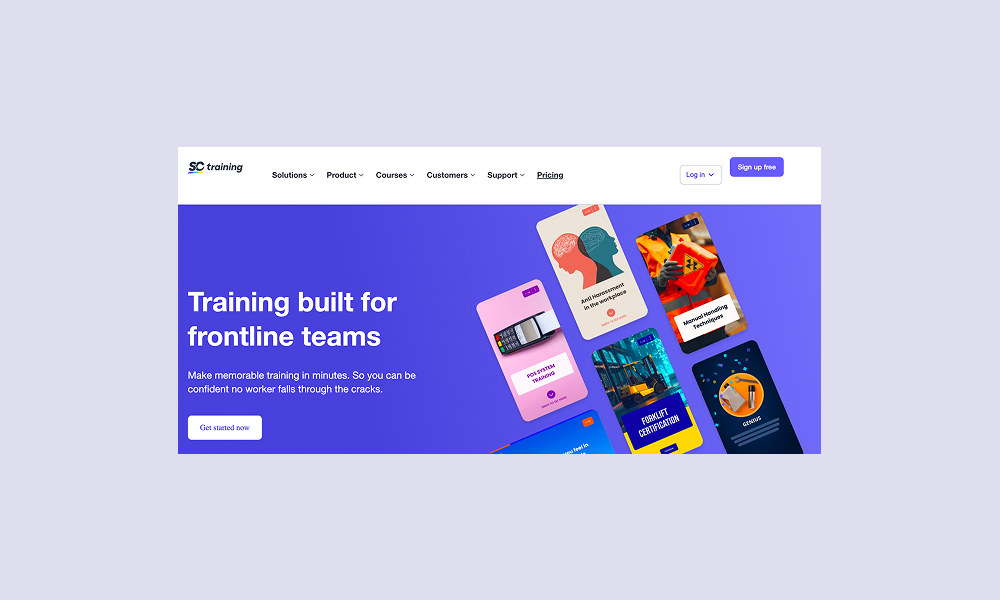
SC Training (formerly EdApp) is the strongest fit in this comparison if you want to turn compliance or SOP-heavy training into short, trackable microlearning modules.
The platform is built around frontline training and recurring compliance workflows. Courses can include quizzes, practical assessments, certificates, recurring refreshers, group training sessions, and manager-level reporting.
SC Training also stands out for its delivery flexibility. Training can be distributed through mobile devices, QR codes, links, or instructor-led sessions while still maintaining centralized tracking and compliance evidence.
Where SC Training is less convincing is as a true out-of-the-box ISO 9001 specialist. The platform is much stronger as a system for building and distributing compliance training than as a dedicated ISO 9001 content vendor.
Compared to Securan, SC Training is still fundamentally library- and template-first rather than built around generating training directly from your own procedures and SOPs.
Pros:
Cons:
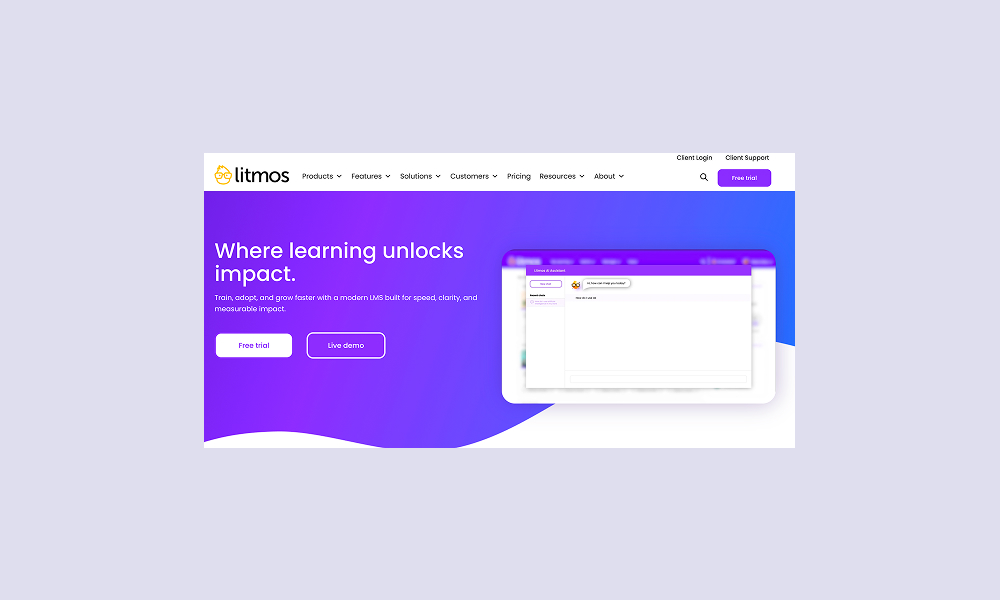
We can't confirm who was first with visual brand identity, Litmos or SC Training. What we do know, is where they differ in functionality.
Litmos is an enterprise compliance LMS focused heavily on reporting, learning paths, compliance administration, and packaged training delivery.
The platform supports certifications, learner uploads, electronic signatures, dashboards, automated reminders, scheduled reporting, and large-scale learning management across departments or regions.
Litmos is strongest when organizations need structured compliance orchestration rather than lightweight training delivery. Compared to many SMB-focused LMS platforms, it clearly targets larger organizations with more formal governance requirements.
That said, Litmos publicly positions itself much more as a broad enterprise compliance platform than as a dedicated ISO 9001 training vendor. Publicly visible ISO 9001-specific training content is relatively limited.
Pros:
Cons:
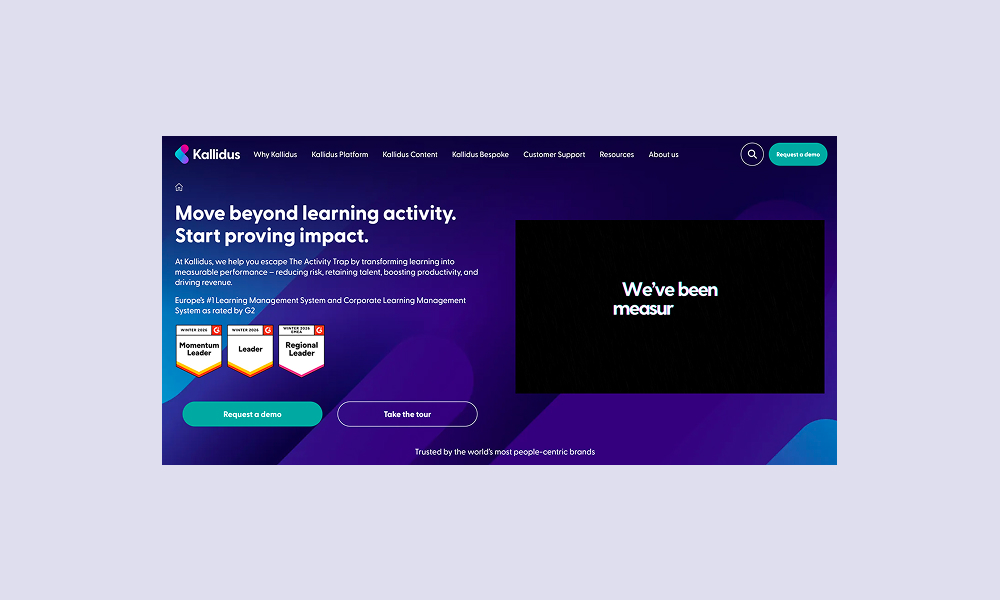
Kallidus combines compliance training, skills tracking, and performance management in a single ecosystem.
The platform is particularly strong for organizations that want compliance training tied to role competence, development plans, certifications, and ongoing performance tracking.
Kallidus supports learning paths, competency checks, reporting, CPD tracking, manager oversight, and recurring compliance workflows. One of its stronger differentiators is the ability to combine digital learning with operational competency validation.
Like Litmos, Kallidus is better viewed as a broad compliance and skills platform than as a dedicated ISO 9001 training specialist. Public ISO 9001-specific course offerings are limited.
Pros:
Cons:
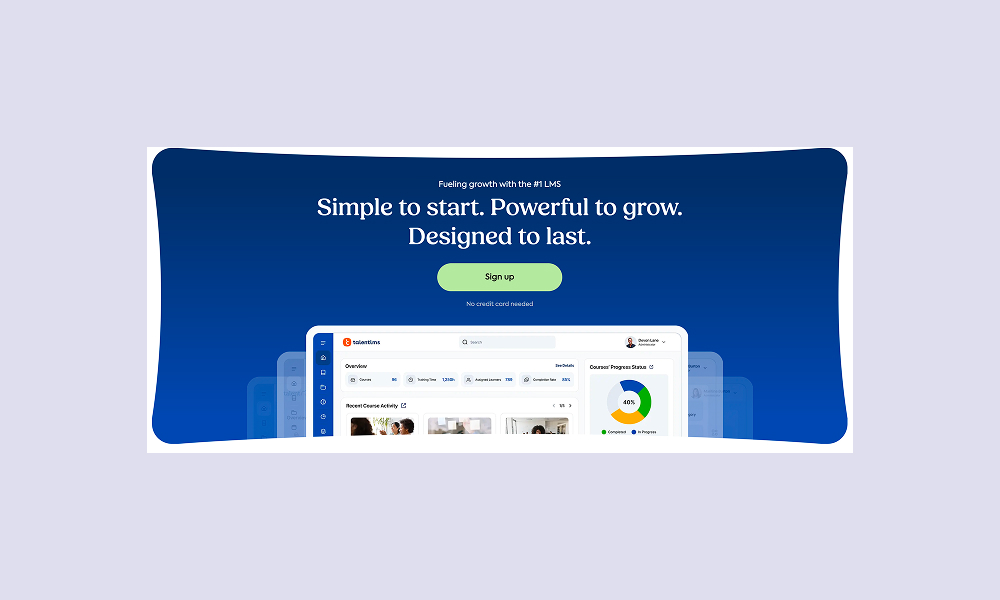
TalentLMS is a flexible cloud LMS aimed mainly at SMB and mid-market organizations that want a relatively fast and affordable way to manage compliance training.
The platform supports certifications, learning paths, tests, surveys, automation, instructor-led training, recurring assignment workflows, and reporting dashboards. Compared to Litmos and Kallidus, TalentLMS feels simpler and easier to deploy.
TalentLMS is strongest as a general-purpose compliance LMS backbone rather than a specialized ISO 9001 solution. While the platform offers quality-management-related content through TalentLibrary, its public ISO 9001-specific positioning is relatively limited.
Pros:
Cons:
Most traditional compliance training platforms were designed around standardized content libraries.
That model still works well for many organizations.
But ISO 9001 training is increasingly moving toward something more operational:
That shift exposes the limits of generic compliance libraries.
Platforms such as SC Training, Litmos, Kallidus, and TalentLMS remain strong solutions for packaged compliance delivery and training administration.
But Securan represents a newer category entirely: AI-generated compliance training built directly from your own SOPs, policies, and quality management documentation.
For organizations that want ISO 9001 training to reflect how the business actually operates, that may ultimately be the more important distinction.

Create documented proof of understanding for audits.

Securan is a platform that turns your SOP into a training program for documented proof of understanding.


