

Turn your policy into training.
Create documented proof of understanding for audits.





isoTracker is a solid, modular QMS. For mid-sized manufacturers chasing ISO 9001 or ISO 13485 certification, it covers the basics: document control, CAPA, audit management, training, non-conformance. The product works.
The pricing is where it gets interesting. At the time of writing, isoTracker charges €3,664 per year for 5 users on all modules. For 20 users, that's €12,731. For 30 users, €18,984. And if you want their "Training for Non Users" add-on, that's another €1,300 on top.
That works out to roughly €60 per user per month at the low end and €53 at the higher end. For a 50-person company, you're looking at a five-figure annual bill before training non-user fees, implementation, and any add-ons.
If that math doesn't work for you, there are alternatives. Some are full QMS platforms like isoTracker itself. One is a much lighter option for companies that don't actually need a full QMS, but do need to prove training compliance during audits.
Here are five worth considering.
A lot of people end up evaluating a QMS like isoTracker because of one specific audit requirement: ISO 9001 clauses 7.2 and 7.3, or ISO 27001 clause 7.2. The auditor wants to see that you've trained employees on your internal procedures, and that you have records to prove it.
A full QMS solves that, but it also gives you a lot of things you may not need: CAPA workflows, supplier management, non-conformance tracking, audit scheduling, calibration management. If you have a quality team running a manufacturing operation, those modules are valuable. If you're a 50-person SaaS company that needs ISO 27001 certification, you're paying for features you'll never open.
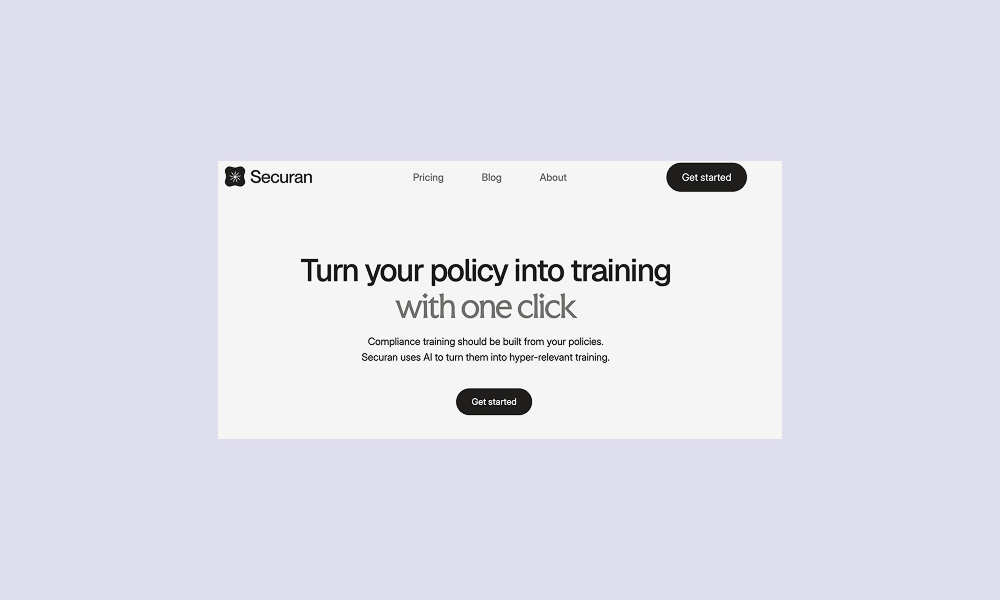
Securan does one thing. You upload your policy or SOP, and it generates a complete training program from it. Employees take the training, you collect completion records with timestamps and scores, and you have audit-ready evidence tied to the specific policy version. When a policy changes, you re-upload it and the system prompts the relevant employees to retrain.
To be clear about what Securan is not: it's not a QMS. There's no CAPA module, no audit scheduling, no supplier portal, no non-conformance tracking. If you need those things, one of the other four options on this list will serve you better.
But if your real problem is "I need to prove training compliance for my audit without spending €10k a year on a QMS I won't fully use," Securan is built for exactly that. Pricing is €100 per month flat, regardless of headcount. No annual contract.
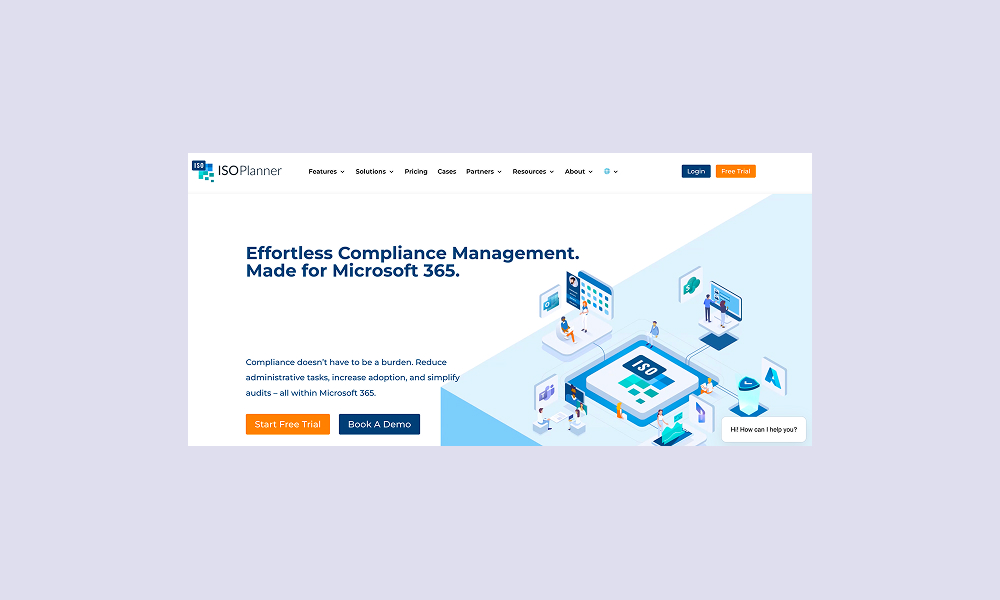
ISOPlanner is one of the few QMS-style platforms in this space that publishes actual prices on its website. It runs as a Microsoft 365 application, so your documents live in SharePoint and tasks integrate with Outlook and Teams. For organizations already on Microsoft 365, that integration removes a lot of the "where does this data live" friction.
The platform covers task management, risk management, processes and objectives, asset registers, dashboards, and a knowledge base. It supports ISO 27001, ISO 9001, NIS2, and several other standards.
Pricing is per "management user," meaning the people actually administering the compliance program rather than every employee in the company:
For a small compliance team running ISO 27001 at a 100-person company, two management users on the Business plan comes to €186 per month. That's a real, knowable number, which puts ISOPlanner in a different category from most competitors on this list.
The trade-off: you'll need to be (or become) a Microsoft 365 shop to get the full value. If you're on Google Workspace, this isn't your tool.
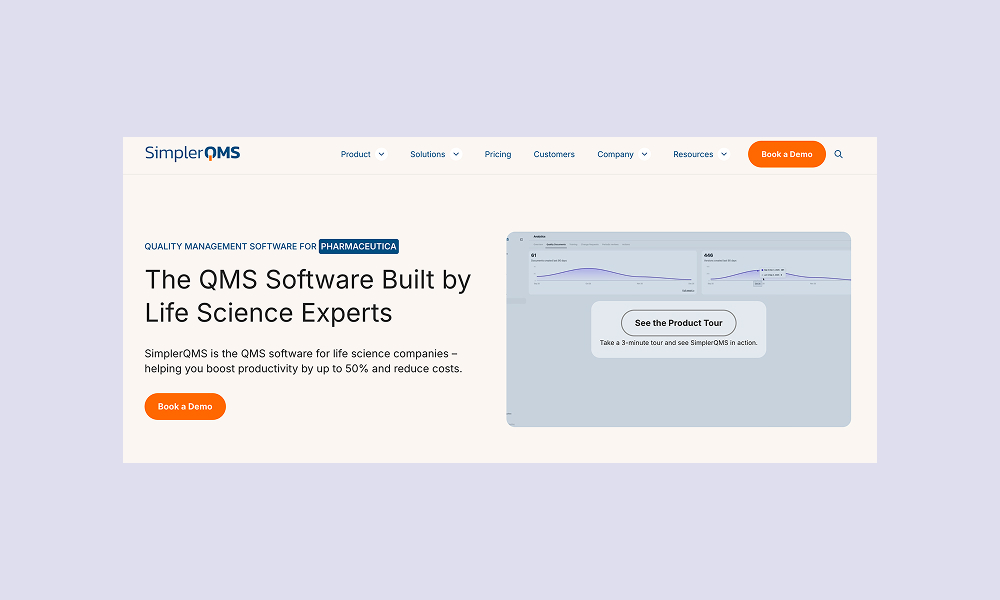
SimplerQMS is built specifically for life sciences companies and supports GxP compliance, ISO 13485, 21 CFR Part 11, and the usual regulated-industry requirements. If isoTracker appealed to you specifically for medical device or pharma compliance, this is the closest direct alternative.
What's notable is that SimplerQMS actually publishes a starting price. According to their pricing page, the minimum subscription is USD 17,500 per year, which covers up to 15 users on their Starter plan. Everything is included: implementation, validation, training, hosting, support.
That's expensive in absolute terms — roughly $1,460 per month minimum. But it's honest. You know what you're walking into before booking a demo, which puts SimplerQMS ahead of most of the eQMS market on transparency alone.
The license types add some complexity: Viewer (free, read-only), Light (initiate quality events, sign documents), Standard (Document Control plus two modules), and Full (everything). You mix and match based on roles, which is more flexible than flat per-seat pricing but harder to estimate upfront.
If you're a regulated life sciences company that needs the full QMS apparatus, SimplerQMS is a serious option. If you're a general SMB chasing ISO 9001, this is probably more system than you need.
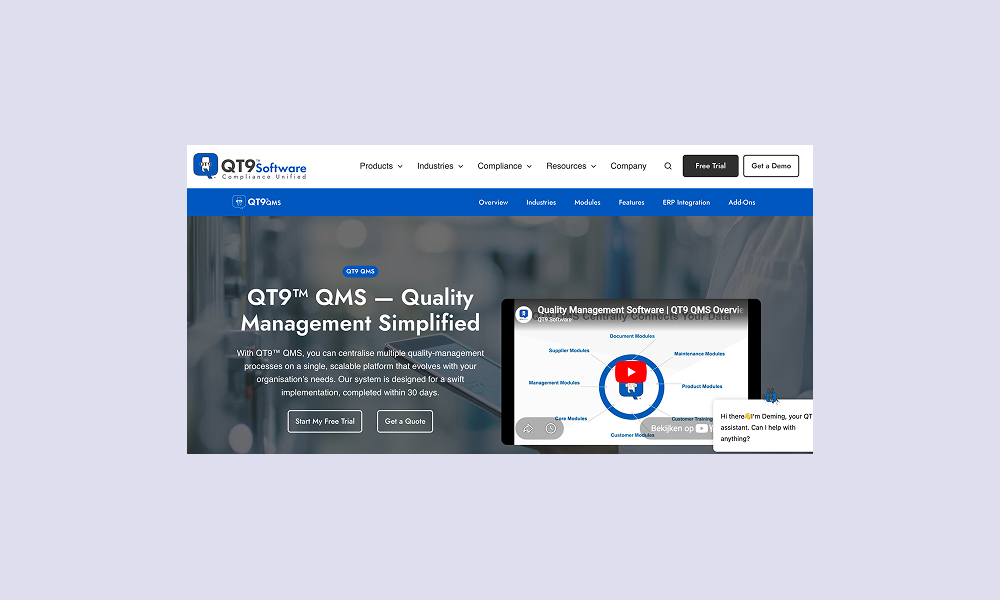
QT9 is one of the better-reviewed mid-market QMS platforms. It uses concurrent licensing rather than per-seat pricing, which means your whole company can have accounts but only a fixed number can be logged in simultaneously. For organizations where most employees only touch the QMS occasionally (sign a document, complete training), concurrent licensing can work out cheaper than per-seat models.
The platform includes 25+ modules covering document control, CAPA, training, audits, supplier management, calibration, and more. Implementation, training, and support are unlimited and lifetime-included, which is genuinely unusual in this market.
The catch: QT9's pricing page lists no numbers. It says "Annual Fees: Concurrent Licenses, Cloud Subscription or On-Premise deployment" and "One-Time Fees: Implementation Services, Training Services." To find out what those fees actually are, you have to book a demo and talk to sales.
Third-party sources put QT9 somewhere in the range of $1,200 to $1,500 per month for a 10-concurrent-user setup, but these are estimates rather than official numbers. Until QT9 puts prices on their site, you're negotiating in the dark.
If you're willing to go through the sales process and need a comprehensive QMS, QT9 is a credible option. Just budget time for several demo calls before you find out what it costs.
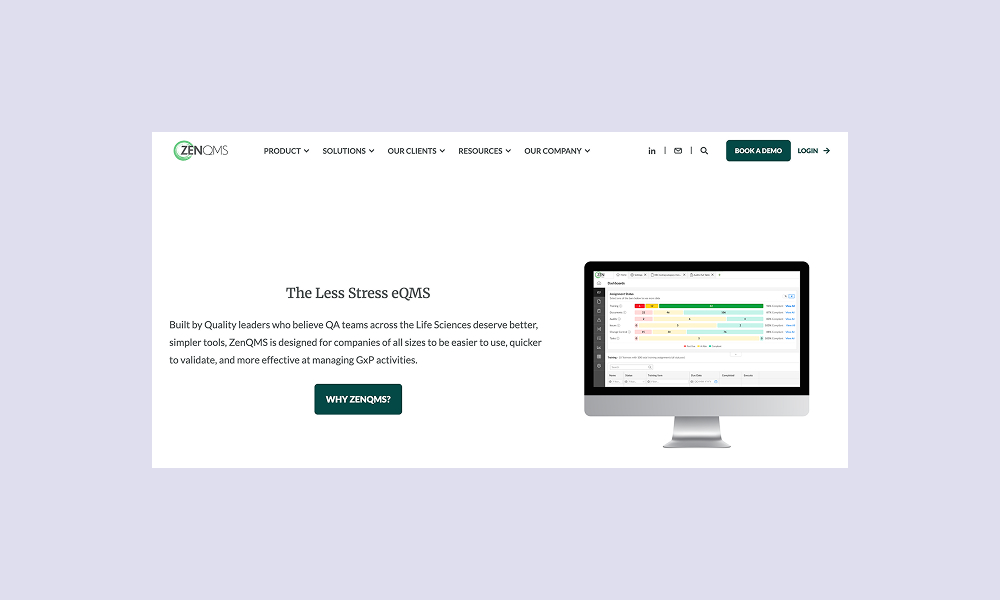
ZenQMS deserves credit for one of the cleaner pricing philosophies in the QMS market. They don't charge per seat license, which means everyone in your company gets access to every module from day one. No tier games, no upgrade upsells, no penalty for hiring.
The platform covers document management, training, issues, change control, and audits. It's GxP-validated, ISO 27001 and ISO 9001 certified, and supports 21 CFR Part 11. The product is built primarily for life sciences but is genuinely usable for ISO 9001 contexts as well.
The frustrating part is that even with their "no seat licenses" pitch, ZenQMS still doesn't publish prices on their pricing page. The page explains the model, talks about included modules and validation, and then asks you to book a demo. The CEO himself signs off on a note saying "schedule a demo and we will send you a same-day proposal." Which is fine, but you still can't comparison shop without a sales call.
If you've been burned by per-seat pricing on a previous QMS, ZenQMS's licensing model is a genuine improvement. Just be prepared to do the demo dance to find out what it costs.
The honest answer is that most of these tools do similar things. The real question is what problem you're actually solving.
If you need a full QMS — CAPA workflows, audit scheduling, supplier management, non-conformance tracking, calibration records, the whole apparatus — then pick one of the four QMS platforms above based on industry fit, integration requirements, and how much you trust the pricing process.
If your actual problem is narrower than that, the math changes. Plenty of companies end up shopping for a QMS because their auditor flagged training records. They don't need CAPA modules or supplier portals. They need to show that employees were trained on the current version of their policies, and that there's evidence for it.
For that specific problem, you don't need a €10,000-per-year QMS. You need a tool that turns your policies into training, runs the training, and stores the evidence. That's the gap Securan was built to fill.
Either path is valid. The wrong path is paying for a full QMS when you only need a piece of it.

Create documented proof of understanding for audits.

Securan is a platform that turns your SOP into a training program for documented proof of understanding.


